


- Home
- Companies
- Remington Medical Inc.
- Articles
- How 600ml Medical Drainage Bag Stock ...
How 600ml Medical Drainage Bag Stock Supports Emergency Care
Emergency preparedness planning often focuses on high-visibility supplies such as ventilators, PPE, and medications. And while these resources are critical, many hospitals underestimate the importance of core consumables that support patient care. A medical drainage bag is one of these essential items. Used across emergency, inpatient, and overflow care environments, drainage systems must be readily available when patient volume spikes.
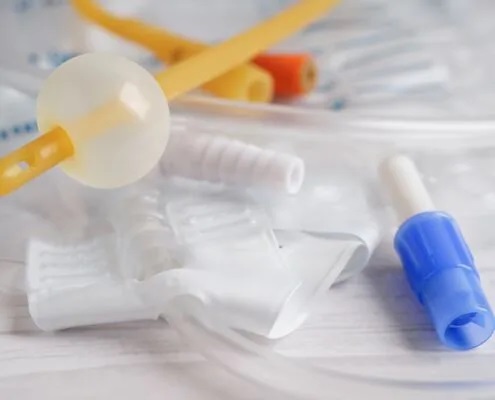
Medical drainage bags support a wide range of clinical needs that remain constant and often intensify during emergencies. Patients undergoing surgical intervention, trauma stabilization, or critical care frequently require drainage to manage fluids, monitor output, and reduce complications. These needs persist regardless of whether care is delivered in a traditional inpatient unit or a rapidly assembled overflow environment.
During emergency response situations, hospitals may convert recovery rooms, outpatient areas, or nonclinical spaces into patient care zones. In these scenarios, the availability of a reliable medical drainage bag ensures continuity of care despite shifting conditions.
Drainage systems allow clinicians to maintain essential monitoring standards even when care environments are unfamiliar or resource-constrained.
Emergency preparedness planning often assumes that routine medical supplies will be readily available, but crisis conditions can quickly invalidate those assumptions. Supply chain disruptions, transportation delays, and regional demand spikes can limit access to essential consumables. When drainage supplies become scarce, the impact ripples across clinical operations.
Without sufficient drainage inventory, care teams may be forced to delay procedures, prioritize certain patients over others, or improvise solutions that compromise efficiency. These disruptions increase stress on staff and introduce unnecessary risk during already volatile situations. Ensuring adequate medical drainage bag stock helps protect hospitals from preventable operational breakdowns during emergency surges.
Preparedness requires products that balance versatility, storage efficiency, and clinical usefulness across multiple scenarios. The 600ml medical drainage bag meets these criteria by offering sufficient capacity without unnecessary bulk.
This size supports accurate output monitoring while remaining compact enough for efficient storage and transport. It can be deployed across emergency departments, ICU surge units, field-style care settings, and outpatient overflow areas without modification. For emergency planners, the 600ml format reduces complexity by serving multiple roles within a single standardized inventory.
Emergency response environments are defined by rapid change. Hospitals must adapt staffing, space, and workflows quickly, often under extreme pressure. A medical drainage bag that supports flexibility becomes a valuable asset during these transitions. The 600ml size offers advantages that align well with the realities of emergency operations.
During surges, patient care may extend beyond traditional units into temporary or repurposed spaces. A compact drainage bag is easier to distribute across these environments without creating logistical bottlenecks. The drainage bag 600ml size allows staff to move supplies quickly while maintaining consistent care standards.
This portability supports faster setup of new care areas and reduces the burden on logistics teams. When supplies must be staged, redeployed, or redistributed, size and weight matter more than they do under normal operating conditions.
Emergency stockpiles must balance readiness with limited storage space. Hospitals cannot afford to dedicate excessive room to a single supply category. The 600ml medical drainage bag allows facilities to store higher quantities within a smaller footprint, improving preparedness without overwhelming storage capacity.
Efficient storage also supports rapid access during emergencies. When supplies are well organized and easy to retrieve, care teams spend less time searching and more time delivering care. This efficiency becomes especially valuable when staffing resources are strained.
When hospitals evaluate emergency readiness, dependable drainage solutions are key. Explore Remington Medical’s drainage bag options to support efficient storage and consistent performance when systems are under pressure.
Emergency scenarios rarely follow predictable patterns. Patient acuity may increase, lengths of stay may extend, and treatment protocols may shift in response to evolving conditions. Each of these factors can significantly increase drainage usage compared to baseline forecasts.
When drainage inventory is insufficient, hospitals may be forced into reactive decision-making. Rationing supplies or seeking last-minute alternatives adds stress and increases the likelihood of errors. Proactive planning ensures that medical drainage bag availability does not become a limiting factor during crisis response.
Scalability is a cornerstone of effective emergency preparedness. Hospitals must be able to expand supply availability quickly without introducing confusion or inefficiency. Standardizing on versatile products like the 600ml drainage bag simplifies inventory planning and deployment.
A scalable drainage inventory allows facilities to adjust stock levels based on threat assessments, surge modeling, and regional risk factors. By focusing on products that perform well across multiple care environments, hospitals reduce SKU complexity and improve response speed during emergencies.
Stockpiling emergency supplies without a clear rotation strategy increases the risk of expiration and waste. Responsible emergency medical supply management requires integrating preparedness inventory into broader procurement and tracking systems.
Hospitals benefit from regular audits, shelf-life monitoring, and controlled rotation of drainage stock. These practices ensure that supplies remain usable and compliant while preserving emergency readiness. A disciplined approach protects both patient safety and financial investment.
Emergency preparedness plans are most effective when they account for both high-profile equipment and essential consumables. While ventilators and medications often receive the most attention, drainage systems support everyday clinical functions that remain critical during crises.
Including medical drainage bag planning in emergency protocols ensures that care teams are not forced to adapt without adequate resources. Drainage preparedness supports patient comfort, accurate monitoring, and workflow continuity across emergency departments, ICU surge units, and temporary care spaces.
From a strategic standpoint, the drainage bag 600ml format aligns well with disaster planning principles. Its adaptability allows it to function across departments without specialization. This versatility simplifies training, deployment, and inventory management during emergencies.
By investing in standardized drainage solutions, hospitals strengthen their ability to respond consistently under pressure. Familiarity with equipment supports clinical confidence, even when care teams are operating outside their usual environments.
Emergency preparedness requires coordination between clinical leaders, procurement teams, and logistics professionals. Drainage systems are often classified as routine supplies, but emergencies reveal how critical they are to sustained operations.
Treating a medical drainage bag as a core emergency medical supply aligns preparedness efforts across departments. This shared understanding reduces last-minute scrambling and improves institutional resilience when normal supply routes are disrupted.
If your organization is reviewing emergency preparedness plans or reassessing drainage inventory strategy, Remington Medical can help. Reach out to discuss drainage bag solutions built to support scalability, reliability, and rapid deployment when patient demand surges.